Ancient Beginnings 

Unlike many ancient diseases that are long gone, the hepatitis virus has managed to survive until the present day from 2000 BC, when the very first hepatitis epidemics were recorded. Since then, people from civilizations around the world have tried to find a way to prevent the Hepatitis B virus.("The Hepatitis B Story")

Discovery of the "Australia antigen" 

In 1965, Dr. Baruch Blumberg discovered the "Australia antigen" (later named HBsAg), the protein that coats the surface of the hepatitis B virus. (The virus was originally called the "Australia antigen" after the Australia aborigine's blood sample that reacted with a hemophiliac patient's antibody.) Four years after Dr. Blumberg's  discovery, he and Dr. Irving Millman created the first hepatitis B vaccine, which was a heat-killed form of the virus.  ("Vaccine History")

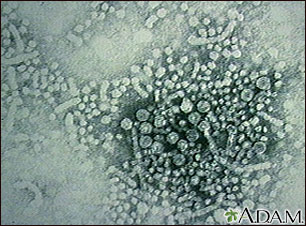
Hepatitis B Virus
Dr. Blumberg

Above Left: The Hepatitis B Virus under the microscope    Above right: Nobel-prize winning Dr. Blumberg 

The First Commercially Available Hepatitis B Vaccine

In 1981, the FDA (Food and Drug Administration) approved a much more advanced, plasma-derived vaccine to be used in humans. This "inactive" vaccine was made from blood collected from infected (HBsAg-positive) donors. The blood went through pasteurization (heat treatment) and formaldehyde to prevent infecting the patient with an active virus. Merck Pharmaceuticals, the first American company to manufacture this vaccine, produced it under the name "Heptavax". ("The Hepatitis B Story") Production of plasma-derived vaccines was discontinued in 1990 and is no longer available in the United States. ("Vaccine History") 

The Second Generation of Hepatitis B Vaccines: DNA Recombinant Vaccines

Although plasma-derived vaccines proved to be effective, the risks of getting Hepatitis B or other diseases transferable by blood spurred the making of DNA recombinant vaccines in 1986 by William Rutter. DNA recombinant is not made from blood and it is impossible to be infected with Hepatitis B from the vaccine. Thus, the plasma-derived vaccines were rendered obselete by the beginning of the 1990s.  ("Vaccine History") 

 Timeline

2000 BCDescription: http://www.beyonddiscovery.org/images/spacer.gifFirst recorded references to hepatitis epidemics.Description: http://www.beyonddiscovery.org/images/spacer.gifDescription: http://www.beyonddiscovery.org/images/spacer.gifDescription: http://www.beyonddiscovery.org/images/spacer.gif

Description: http://www.beyonddiscovery.org/images/spacer.gifDescription: http://www.beyonddiscovery.org/images/spacer.gifDescription: http://www.beyonddiscovery.org/images/spacer.gif1963Description: http://www.beyonddiscovery.org/images/spacer.gifBaruch Blumberg discovers Aa, the Australian antigen (later called HBsAg).Description: http://www.beyonddiscovery.org/images/spacer.gifDescription: http://www.beyonddiscovery.org/images/spacer.gifDescription: http://www.beyonddiscovery.org/images/spacer.gif

1967Description: http://www.beyonddiscovery.org/images/spacer.gifBetween 1967-1968, Blumberg, Kazuo Okochi, Alfred Prince, Alberto Vierrucci, and colleagues report that Aa is involved in the development of hepatitis B.Description: http://www.beyonddiscovery.org/images/spacer.gifDescription: http://www.beyonddiscovery.org/images/spacer.gifDescription: http://www.beyonddiscovery.org/images/spacer.gif

1969Description: http://www.beyonddiscovery.org/images/spacer.gifIrving Millman and Blumberg devise a concept and through the Fox Chase Cancer Center receive a patent for using Aa to prepare a hepatitis B vaccine.Description: http://www.beyonddiscovery.org/images/spacer.gifDescription: http://www.beyonddiscovery.org/images/spacer.gifDescription: http://www.beyonddiscovery.org/images/spacer.gif

1970Description: http://www.beyonddiscovery.org/images/spacer.gifD. S. Dane discovers whole hepatitis B virus particles in blood samples examined with the electron microscope.Description: http://www.beyonddiscovery.org/images/spacer.gifDescription: http://www.beyonddiscovery.org/images/spacer.gifDescription: http://www.beyonddiscovery.org/images/spacer.gif

1972Description: http://www.beyonddiscovery.org/images/spacer.gifLaws are passed in the United States requiring testing of donor blood for HBsAg antigen.Description: http://www.beyonddiscovery.org/images/spacer.gifDescription: http://www.beyonddiscovery.org/images/spacer.gifDescription: http://www.beyonddiscovery.org/images/spacer.gif

1975Description: http://www.beyonddiscovery.org/images/spacer.gifWolf Szmuness and Hilleman and colleagues begin tests of the hepatitis B vaccine.Description: http://www.beyonddiscovery.org/images/spacer.gifDescription: http://www.beyonddiscovery.org/images/spacer.gifDescription: http://www.beyonddiscovery.org/images/spacer.gif

1980Description: http://www.beyonddiscovery.org/images/spacer.gifHepatitis B virus vaccine derived from blood serum is developed by Hilleman and colleagues

1981 Plasma-derived vaccine is approved by the FDA

1983Description: http://www.beyonddiscovery.org/images/spacer.gifBetween 1983-1986, subunit hepatitis B virus vaccine derived from yeast is developed by William Rutter and colleagues and approved for use.Description: http://www.beyonddiscovery.org/images/spacer.gifDescription: http://www.beyonddiscovery.org/images/spacer.gifDescription: http://www.beyonddiscovery.org/images/spacer.gif

1990 Plasma-derived vaccine is discontinued by the FDA 


This timeline text belongs fully to its rightful owner, Beyond Discovery (http://www.beyonddiscovery.org/Includes/Dialogs/Timeline.asp?ArticleID=265) Timeline edited to suit only the history of Hepatitis B.


This free website was made using Yola.

No HTML skills required. Build your website in minutes.

Go to www.yola.com and sign up today!

Make a free website with Yola